Holidays Past: Celebrating the Season in the Heart of the City
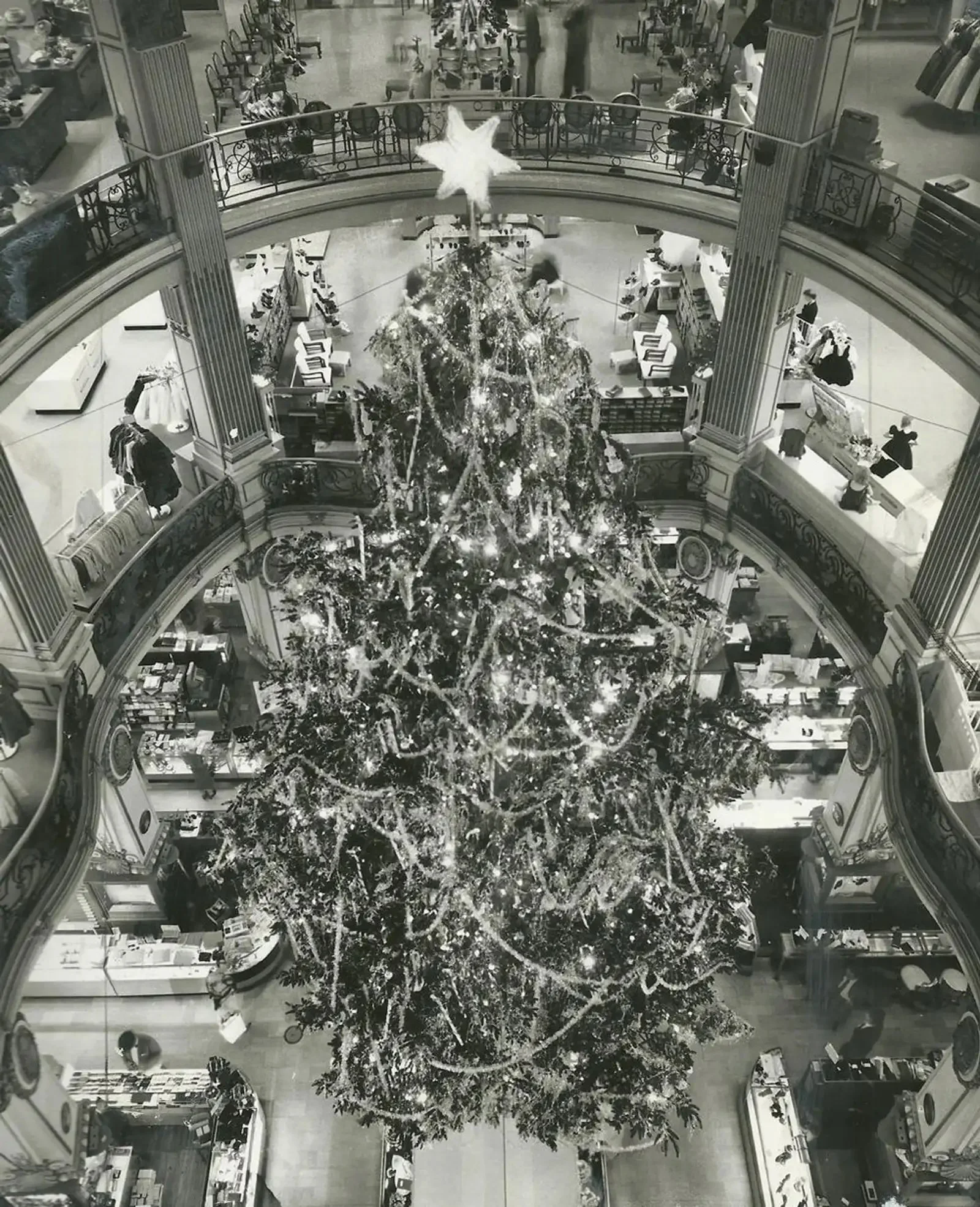
City of Paris Christmas Tree, circa 1966. Photo: Jerry Telfer
Mayor Lurie’s "Heart of the City" revitalization of Union Square reminds COUPAR of how the plaza celebrated winter holidays in the past, as we look to its exciting future. One of the most beloved traditions was the City of Paris department store's forty-foot Christmas tree in the rotunda of its location on Geary and Stockton Streets. The store goes back to the California Gold Rush when, in 1850, French brothers Felix and Emil Verdier sailed to San Francisco in a ship named “La Ville de Paris” laden with champagne and cognac for the miners and silks and lace for their wives and girlfriends. Initially, they sold their goods straight from the boat.
By 1896, the City of Paris moved to Union Square, in a Beaux-Arts building designed by Clinton Day. The 1906 earthquake and fires spared the structure's facade while destroying its interiors. The Verdier family commissioned renowned architects John Bakewell and Arthur Brown, both graduates of the École des Beaux-Arts, to reconstruct the City of Paris. While they made a few exterior changes, they created a central elliptical rotunda surmounted by a stained-glass dome depicting the ship La Ville de Paris and the store's Latin motto, "Fluctuat nec mergitur"-"It floats and never sinks."
The Louis XVI-style grillwork, with an open view of all floors, provided space for the forty-foot tree, regarded as San Francisco's official Christmas tree. Sadly, despite the City of Paris’ listing on the National Register of Historic Places and as a California Historical Landmark, and preservationists' protests, the store was demolished in 1981 to make way for the Dallas-based Neiman Marcus. Postmodern architect Philip Johnson designed the new building, incorporating the original rotunda and stained-glass skylight.
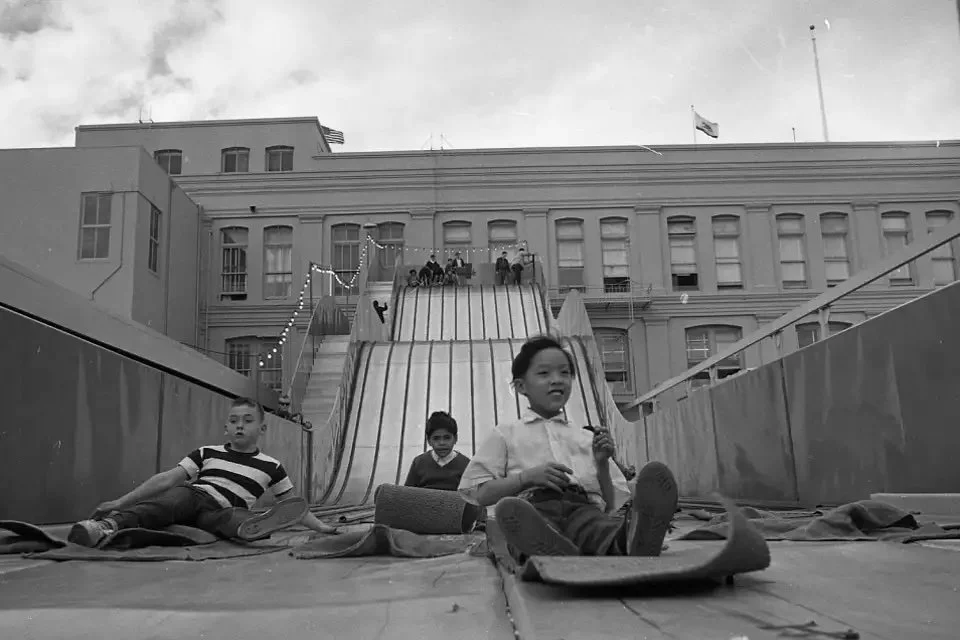
San Francisco's Emporium rooftop Christmas, circa 1968. Photo: Bill Young
In addition to the City of Paris, other magical stores of holidays past existed in downtown San Francisco. I. Magnin Union Square was known as "the Marble Lady" for the ten-story white stone building that architect Timothy L. Pflueger designed in 1948. Its two-story main hall, with Lalique light fixtures, gilded ceilings, and glass murals, showcased Christmas trees and decorations. People would wait in line for hours to see their beautifully decorated trees and take home a unique ornament at Florist Podesta Baldocchi on Grant Ave., with its distinctive tiled floor made famous in Alfred Hitchcock's 1957 film Vertigo. But the favorite outing for children was the Emporium on Market Street with Santa on parade and rooftop rides.
COUPAR looks forward to seeing Mayor Lurie’s continued revitalization of Union Square and downtown, because, like the ship La Ville de Paris and the City of Paris's Latin motto, "Fluctuat nec mergitur," San Francisco floats and never sinks.
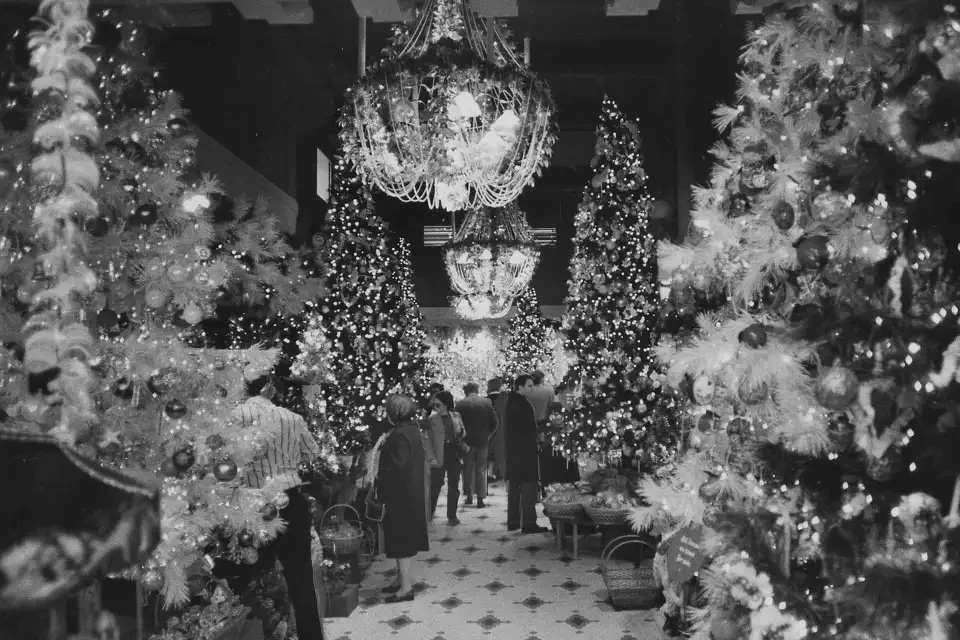
Podesta & Baldocchi on Post and Sutter Streets, 1980. Photo: Arthur Frisch