Saddle Up: The Year of the Horse
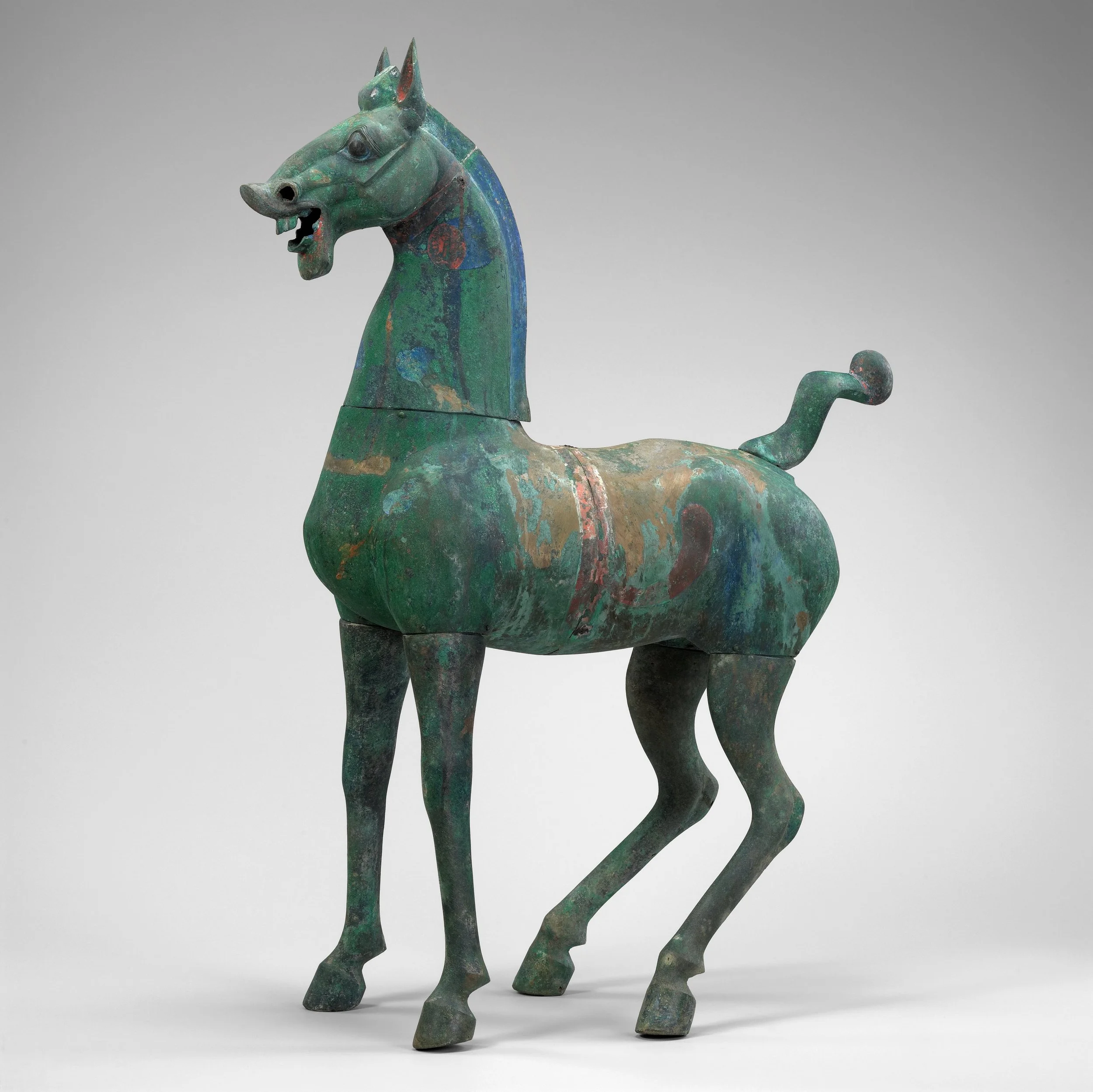
Image: The Minneapolis Institute of Art, Celestial Horse, Bronze with traces of Polychrome, Eastern Han Dynasty, China
At COUPAR, we celebrate the Chinese Lunar New Year, and this year is the Year of the Horse. In the original legend, the horse was a magnificent, winged "Heavenly Horse" known for its speed and power. It was the Jade Emperor's favorite until it killed a tortoise guard at the Dragon Palace. As punishment, the Jade Emperor took away its wings and banished it. Over time, the horse redeemed itself by serving people in work, war, and leisure, becoming a symbol of loyalty, perseverance, and refinement. It then joined the other eleven animals in the Chinese Zodiac.
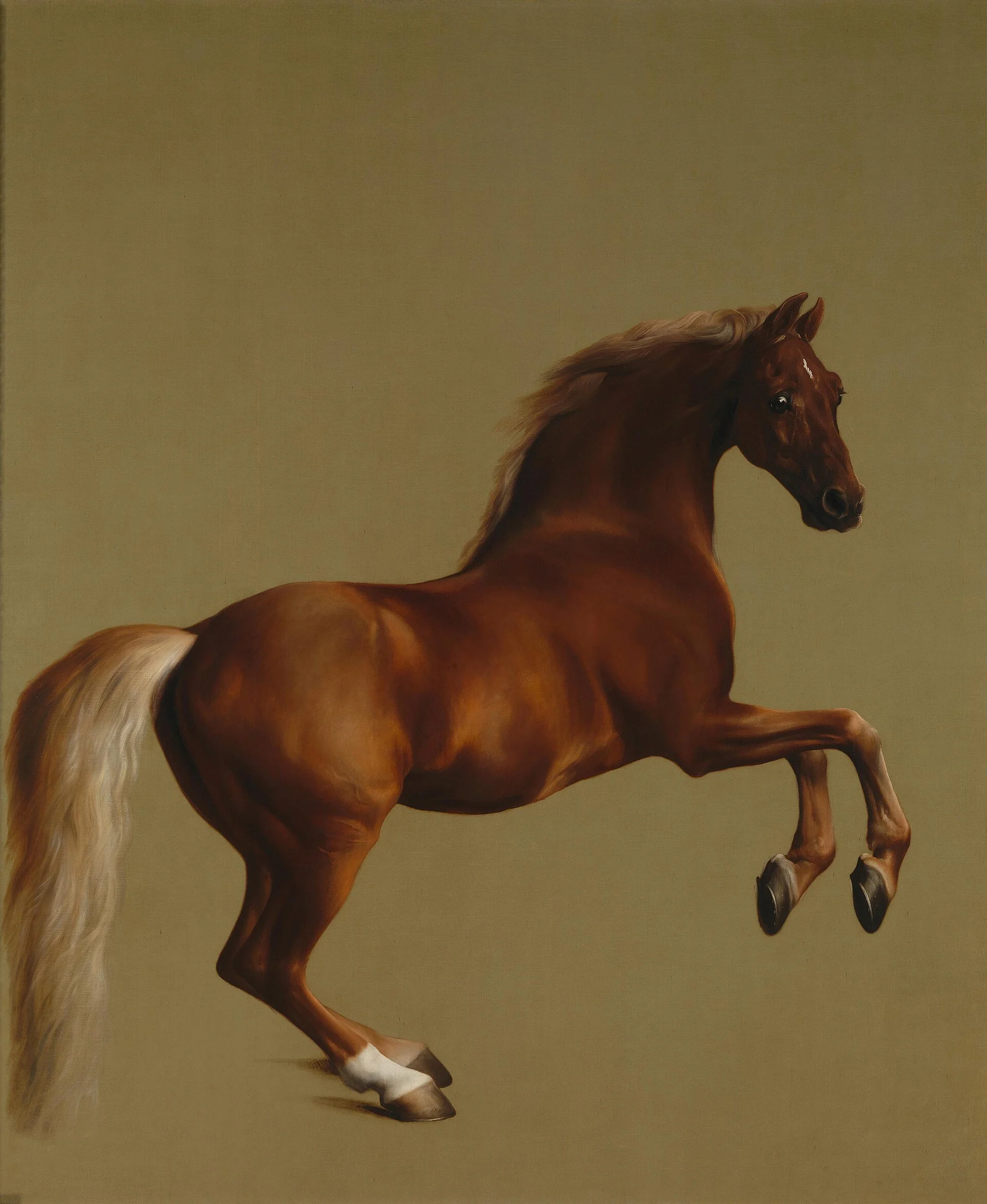
Image: National Gallery, “Whistlejacket,” George Stubbs, c 1762, England
Like in Eastern culture, the West has also valued the horse for its key role in shaping civilization. Horses provided transportation, helped farmers during peaceful times, and supported armies in battle. They also became symbols of wealth and status. Aristocrats often had portraits made of their prized horses. In 1762, the self-taught British artist George Stubbs painted the 2nd Marquess of Rockingham's racehorse, Whistlejacket. Stubbs became especially famous for his horse paintings.
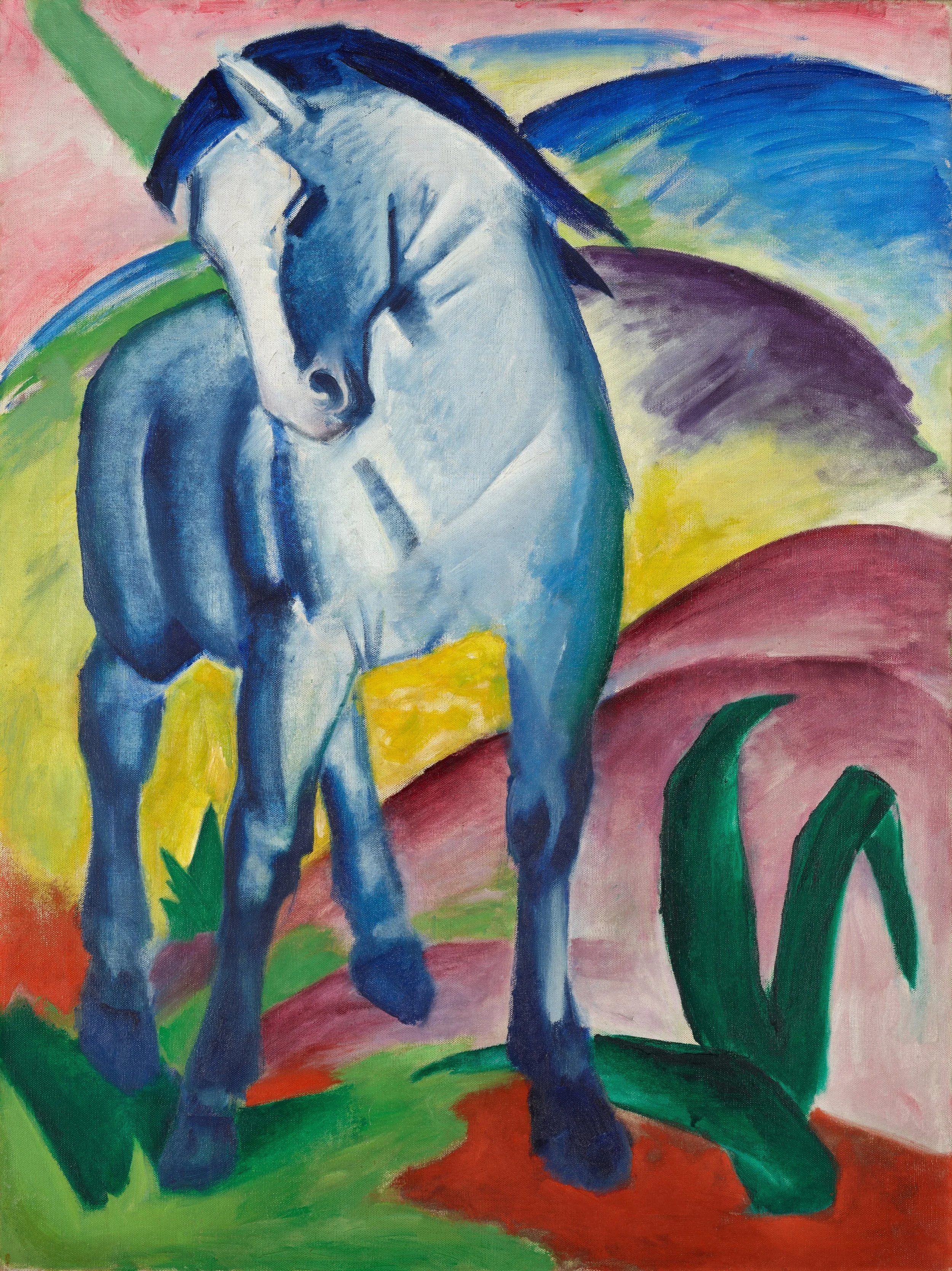
Image: Lenbachhaus, “Blue Horse I,” Franz Marc, c 1911, Germany
Horse paintings from the eighteenth century were realistic, but German Expressionist Franz Marc took a different approach in his 1911 painting “Blue Horse I.” Marc and other German Expressionists formed a group called “Der Blaue Reiter” (The Blue Rider), which he started with Wassily Kandinsky. Kandinsky liked riders, Marc liked horses, and both shared a love for the color blue. For them, the horse stood for breakthroughs, while blue symbolized spirituality over material things. We wish you a Year of the Horse filled with breakthroughs and reflection.